




NK India

Digital
Transformation
Services at
Nippon Koei

Overview

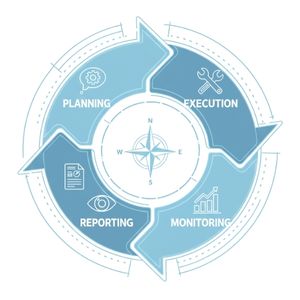
Nippon Koei India’s Digital Transformation Services bring together ERP, PMIS, BIM CAD dashboards and workflow automation to support better decision making across the project lifecycle from planning to reporting. The systems are device agnostic and work smoothly on mobile tablets and desktop devices. The platforms are designed to be intuitive for field teams while remaining aligned with government and funding agency compliance requirements.

Our Digital Transformation Solutions

At NK India, we help businesses modernize operations through advanced digital technologies. Our solutions include ERP (SAP) for efficient business management and PMIS (Platform) for better project planning and monitoring.

ERP (SAP)

SAP has been implemented across the organisation to digitise internal processes and ensure smooth integration between business functions. The implemented modules include Success Factors SF Customer Experience CX and S4Hana with Finance and Controlling FICO, Materials Management MM, Project Systems PS and Sales and Distribution SD. 

This comprehensive SAP deployment provides real time visibility of data along with streamlined workflows, automated reporting and stronger compliance with statutory and regulatory requirements. The ERP system supports role based access control and works across devices while aligning with the organisation’s digital transformation goals.

PMIS (Platform)

The Project Management Information System PMIS is a cloud hosted collaborative platform that supports package structuring contract workflows RFIs quality inspections and document and drawing management along with financial verification and real time dashboards. It integrates with Primavera and MS Project and supports visualisation through BIM and CAD.

Projects (Selected Implementations)

APCRDA and ADCL Construction Management Platform

Nippon Koei India worked as a solution provider to configure, customize, integrate, implement and maintain an ICT platform for construction management for APCRDA and ADCL. The PMIS platform enabled smooth coordination between multiple stakeholders while automating key workflows and improving transparency in project execution. The system included modules for document management, contract administration, progress monitoring and real time analytics which supported timely and compliant delivery of infrastructure initiatives across the capital region.

Ahmedabad Peri Urban Livability Improvement Project AUDA

The implementation included modules for project and package management communication and notifications RFIs quality and safety drawing and document management data and analytics invoices and payments along with equipment and manpower management.

Assam SASEC Corridor Connectivity Improvement Project Package 25 Borkhola to Kalain 21.378 km

PMIS supported multi module tracking including data and analytics for physical and financial progress RFIs quality monitoring and contractor payment tracking.

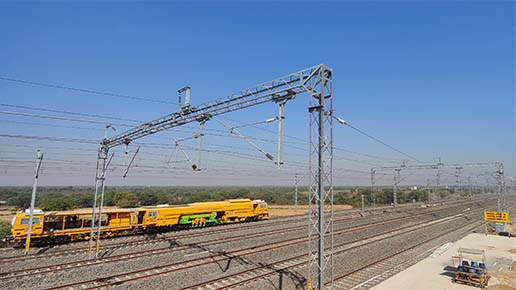
Dedicated Freight Corridor Rewari to Vadodara about 922 RKM

PMIS was deployed to support multi stakeholder coordination, compliance tracking and module based monitoring across the project lifecycle.

National Health Mission, Tamil Nadu (PM-AMHI Mission & 15th FC Grants): PMIS modules implemented for building construction management, stakeholder management, progress monitoring, and compliance.

Modules & Capabilities

Project/Package Management & Stakeholders

Communication & Collaboration

Drawing Review & Document Management

Contracts, Invoices & Payments

Work & RFI Management

Quality & Safety

Data & Analytics

Equipment, Inventory

ProjectLocation / OrganizationKey PMIS Modules / FeaturesPurpose / Impact
Construction Management ICT Platform (APCRDA & ADCL)Andhra Pradesh• Document management
• Contract administration
• Progress monitoring
• Real-time analytics
• Improved coordination among stakeholders
• Automated workflows
• Enhanced transparency in project execution
Ahmedabad Peri-Urban Livability Improvement Project (AUDA)Ahmedabad• Project and package management
• Communication and notifications
• RFIs
• Quality and safety management
• Drawing and document management
• Invoices and payments
• Equipment and manpower management
• Streamlined infrastructure project management
• Improved monitoring and reporting
SASEC Corridor Connectivity Improvement Project – Package 25Assam• Data and analytics for physical and financial progress
• RFIs
• Quality monitoring
• Contractor payments
• Efficient tracking of project progress
• Better financial monitoring
Dedicated Freight Corridor (Rewari–Vadodara)India• Multi-module monitoring
• Compliance tracking
• Stakeholder coordination
• Improved management of large-scale railway infrastructure projects
National Health Mission (PM-AMHI Mission & 15th FC Grants)Tamil Nadu• Construction management
• Stakeholder management
• Progress monitoring
• Compliance tracking
• Better monitoring of health infrastructure projects
• Improved implementation efficiency

Studies: Successfully complete under JICA Loan / Grant with Govt. of India (States)

Haryana Sustainable Horticulture Promotion Project

Scope: Preparatory survey and DX roadmap for Haryana Agriculture & Horticulture Department.

Focus Areas:

  • Agricultural data development and utilization
  • Agri Stack integration
  • DX in wholesale markets and farmer-centric services
  • Facility design proposals and beneficiary effect calculations

Key Deliverables:

  • TOR-based outputs on laws, regulations, and infrastructure for DX
  • Stakeholder interviews and inception reports

Impact: Introduced automated digital solutions for farming processes and departmental workflows.

Assam Fisheries Digital Transformation (HIMS)

Objective: Transform fisheries sector through ICT and SaaS platform.

Components:

  • Digital services for fish farmers and department officers
  • Online training, extension, and technical consultation
  • e-Procurement, e-Insurance, e-Accounting modules
  • MIS for program management and reporting

Expected Outcomes:

  • Increased fish production and productivity
  • Climate-resilient aquaculture practices
  • Enhanced livelihoods and blue economy promotion

Platform Features:

  • Single Sign-On (SSO)
  • Cloud-hosted, device-agnostic access
  • Integrated cold chain and feed mill infrastructure support

Impact: Assam Fisheries Digital Transformation (HIMS) is expected to drive sectoral growth, resilience, and inclusivity, ultimately improving the welfare of fish farmers and supporting the state’s sustainable development goals.

FAQs

Digital transformation services help organizations improve their operations using digital technology. These services allow teams to perform key functions such as:

  • Improving the way in which teams manage and organize their business data with improved efficiency through the use of data management tools. 
  • Automating routine tasks that are time-consuming and error prone through the use of task automation tools. 
  • Providing teams with the ability to access their systems and related data from multiple locations using remote access tools. 

These services can improve an organization’s ability to work more efficiently, make better decisions and respond quickly to changes in the business environment.

Infrastructure and engineering projects involve many teams, systems and resources. Digital transformation services help manage these complexities.

Key benefits of digital transformation consults include:

  • Real-time monitoring: Track site activities, equipment performance and progress through digital dashboards.
  • Improved Collaboration: Engineers, contractors and project managers can access file updates and design information instantaneously through shared project files.
  • Fewer Errors: Many mistakes are made in the manual process of entering information and capturing that information is accomplished using automated systems.
  • Predictive Maintenance: Analyzing data over time gives engineers a chance to identify problems with equipment before they become serious.
  • More Effective Resource Management: Project managers can track the usage of labor materials and equipment throughout the entire project.
  • Automated Workflow: The system executes all procedures to approve, report and document.

Digital transformation services use several technologies that improve operations and decision making.

  • ERP Systems: It allows businesses to centralize their business processes and support more efficient operational processes across their organisation.
  • Project Management Platforms: It supports the planning and monitoring of projects to improve coordination and accountability between companies.
  • Data Analytics: It supports the collection and analysis of operational data that can be used to enhance decision-making both strategically and tactically.
  • Cloud Infrastructure: It offers businesses secure and scalable ways to store data and gives business users access to their operating data remotely from anywhere in the world at any given time.

Our digital transformation engineers make automation tools that allow businesses to automate certain repetitive tasks to save time, reduce errors, and be more productive.

Digital transformation consults help organizations improve efficiency and manage operations more effectively.

  • Increased efficiency: Digital technologies allow us to do less manual labor and create a more seamless daily work flow.
  • Reduced costs: More efficient resources and automatisation means we can manage our operational costs more effectively.
  • Accelerated Project Delivery: Teams work faster because of effective communication and streamlined processes.
  • Improved quality: Digital systems provide consistent records and processes.

These benefits give organizations a competitive advantage and allow businesses to react quickly to market changes.

Digital transformation services give project managers better visibility and control over project activities.

Here are some key benefits from a digital transformation:

  • Workflows Streamlined: Having efficient processes and coordination across teams.
  • Manual Tasks Decreased: Automating repetitive tasks reduces the number of times a team has to do that item.
  • Greater Productivity: Teams can complete work at a much faster rate.
  • Strong Digital Foundations: Building a set of systems that will grow with you.

By proceeding gradually, an organization can implement technology, while limiting the level of disruption it has to the organization.

Successful digital transformation requires strong planning, leadership support, and employee involvement.

Key Factors are:

  • Clear Strategy: Create an objective and a plan to achieve it.
  • Leadership Support: Senior leadership provides the overall direction, resources, and funding.
  • Training of Employees: Staff are trained to utilise the systems being implemented.
  • Scalable Technology: Technology chosen should have the ability to scale in regard to growth and provide flexibility to work with other technologies.
  • Continuous Improvement: To improve the performance of systems, continuous review of performance must be conducted to continually improve the processes. 
  • Industry Best Practices: Follow proven best practise in your industry to reduce risk associated with implementing new technologies. 

Organisations that effectively align technology and strategy get high success.

Many industries use digital systems to manage complex operations and large amounts of data.

Industries that benefit include:

  • Track projects and manage resources efficiently.
  • Improving coordination between various engineering EPC firms with multiple projects.
  • Efficiently delivering services across government / public sectors while maintaining more transparency.
  • Monitoring of infrastructure and management of assets in Energy and Utilities.
  • Improving production efficiency and visibility of Supply Chain within Manufacturing.
  • Data management and delivery of services to Healthcare and Smart Cities.

Organizations will follow a series of steps to initiate their digital transformation journey. Commonly followed steps include:

  • Creating a technology roadmap: A technology roadmap provides information on what tools will be implemented at what stages of the project.
  • Establishing key performance indicators: KPIs provide organizations with the means to measure the level of success achieved.
  • Implementing improvements that have immediate benefits: Organizations should begin their digital transformation journey by implementing quick wins.
  • Establishing a feedback loop and examining for the need of changes in strategies: This will allow for continuous improvement of digital systems through ongoing monitoring and evaluation.

Our digital transformation engineers create technologies that help you in structuring projects in a planned manner to ensure that organizations successfully implement digital systems.